
Revit MEP modeling, clash detection, coordination, and shop drawings—delivered with LOD-based accuracy.
1K+
Clients Served
20+
Countries
10K+
Projects Delivered
300+
Expert Engineers
Piping and Instrumentation Diagrams (P&ID) Drawing Services
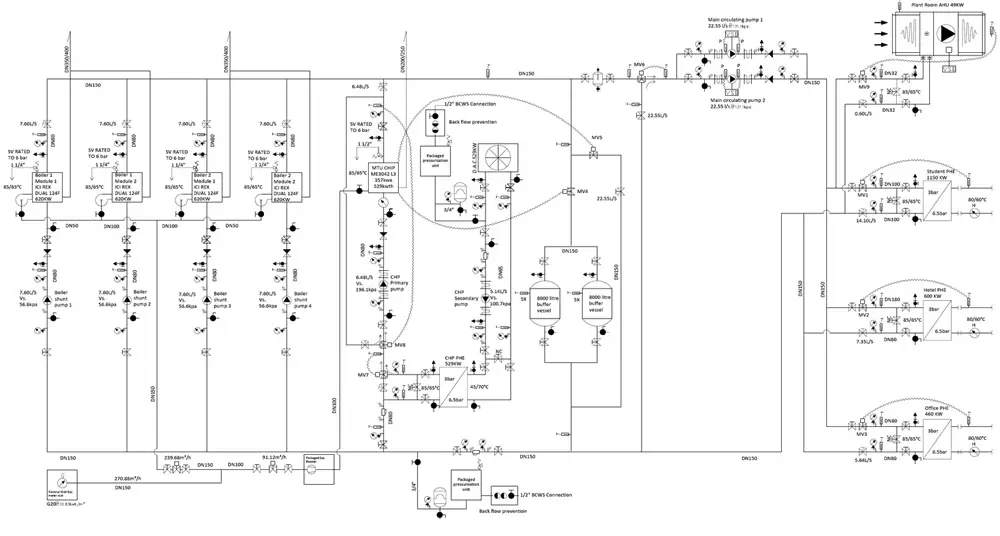
Advenser is a leading provider of piping and instrumentation diagram (P&ID) services, leveraging advanced technology to deliver accurate, high-quality designs. Our skilled team of engineers brings extensive domain knowledge, assisting clients in creating manufacturing workflows for physical plants. Using precise P&IDs, we guide clients through plant construction, ensuring compliance with essential safety standards. Additionally, we specialize in producing highly accurate P&IDs by utilizing 3D laser-scanned (point cloud) data.
Piping and instrumentation diagrams are essential for process plants, offering stakeholders a comprehensive view of equipment layouts and supporting effective process control, operation, maintenance, and system upgrades.
Our detailed P&IDs provide a graphical representation that encompasses the full network of piping, instrumentation, system equipment, and specifications required to design, build, and operate a facility. These diagrams empower facility managers to clearly understand the relationships between piping and instrumentation components, ensuring optimal plant operation.
Comprehensive MEP BIM & VDC services
A complete range of MEP BIM services covering modeling, coordination, detailing, and implementation—designed to support accurate, efficient, and construction-ready project delivery.
Need Support for Your MEP BIM Requirements?
Speak with a BIM specialist today and get actionable insights for your project.
Provider Accurate, Standardized P&ID Drawings for Process Clarity and Control
P&ID services are developed to support engineers, contractors, and plant operators with detailed and easy-to-understand diagrams. Each drawing ensures accurate system representation, enabling efficient design validation, operation, and maintenance.
Our P&ID Drawing Capabilities
Process Flow Representation
Clear depiction of process flow lines, piping routes, and system connectivity to ensure proper understanding of system operations.
Instrumentation & Control Diagrams
Detailed representation of instruments, sensors, control valves, and automation systems to define system control logic.
Equipment Layout Integration
Accurate placement and representation of equipment such as pumps, tanks, heat exchangers, and compressors within the process system.
Valve & Piping Details
Comprehensive representation of valves, pipe sizes, flow directions, and connections to ensure system clarity and operational accuracy.
Scope of P&ID Drawing Services
- Piping and Instrumentation Diagrams (P&ID) Drafting
- Process Flow Diagram (PFD) Conversion to P&ID
- Instrumentation Layout & Tagging
- Valve & Control Logic Representation
- Equipment & Process Integration Diagrams
- Scan to BIM and as-built modeling
- BIM content and family creation
- LOD-based modeling (LOD 100–500)
- BIM execution plan alignment
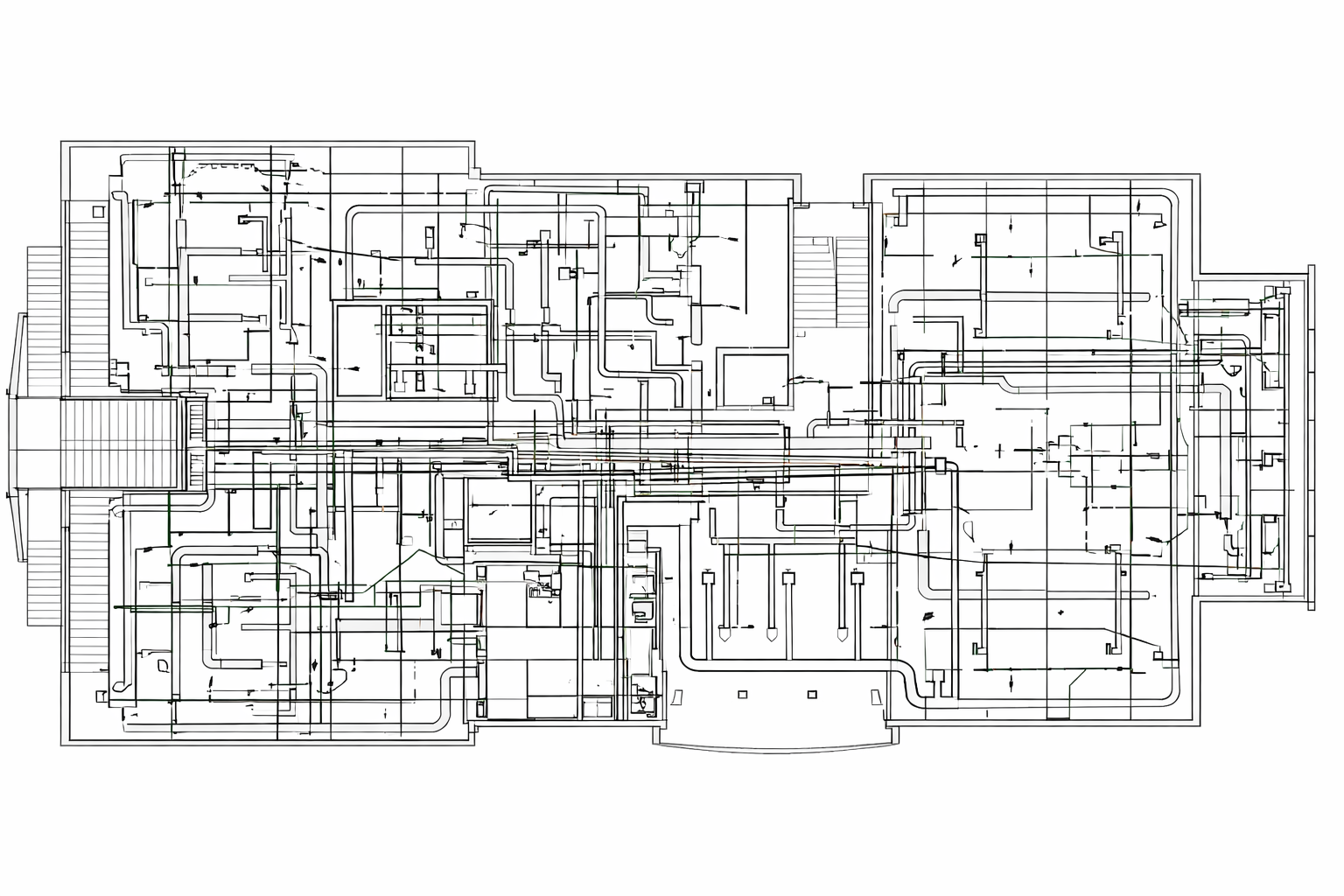
Complete MEPF BIM Solutions for Modeling, Coordination, and Execution
The Quality We Offer
Each P&ID drawing is developed with strict adherence to project standards and industry guidelines. Close attention is given to symbol consistency, tagging accuracy, and process clarity. A dedicated quality control process ensures that every diagram undergoes detailed verification. Experienced quality analysts review each drawing to identify inconsistencies and ensure accuracy, clarity, and compliance before final delivery.
What We Deliver
Using industry-standard tools and structured workflows, P&ID drawings are developed as accurate and standardized documentation:
- Detailed P&ID drawings with process clarity
- Instrumentation and control system representation
- Equipment and piping integration diagrams
- Standardized symbols and annotations
- Updated and revision-controlled documentation
- Ready-to-use drawings for design, operation, and maintenance
Why Choose Us
Standardized Representation
Diagrams developed using industry standards such as ISA ensure clarity and consistency.
Process Clarity
Clear visualization of piping, instrumentation, and control logic improves understanding and decision-making.
Error Reduction
Accurate diagrams minimize misinterpretation and operational risks.
Efficient Coordination
Seamless integration with design and engineering workflows.
Experienced Team
Skilled professionals with expertise in handling complex MEP systems across global projects.
Client-Focused Approach
Flexible workflows and structured communication aligned with project requirements.
Our Software Expertise
 Revit Suite
 Navisworks Manage
 AutoCAD
 AutoCAD 360 PRO
 BIM 360
 Autodesk Inventor
 FabMEP
 Civil 3D
 ReCap Pro
International Standards We Follow
IECC
International Energy Conservation Code
AS 1668.2 Australian Standards
The use of mechanical ventilation and air conditioning in buildings
AS 1851-2005 Australian Standards
Standards for maintenance of fire protection systems and equipment
ASHRAE & NIM Standards
Standards 55-293, 90.1, 100.293, 105, 293, and more
NFPA Codes
National Fire Protection Association codes for fire safety systems
AS/NZS 3666 — New Zealand Standards
Standards for maintenance of fire protection systems and equipment
NBN standards
S21-200, S21-201, S21-202, S21-203, N S21-207
We Team up with
- Residential & MEP Contractors
- Structural & MEP Engineers
- General contractors & Homebuilders
- Property & Facility Managers
- Modular/Prefabricated Builders
- Architectural Firms
- Project owners & Developers
- Interior Designers
Featured Products



Sectors that Benefit from our BIM Services
Residential
We deliver BIM services for housing projects, improving design accuracy, coordination, and timely execution.
Commercial
Our BIM support ensures efficient planning and delivery of offices, business parks, and commercial complexes.
Institutional
We support educational and civic projects with BIM workflows that ensure compliance and long-term performance.
Healthcare
We offer BIM services for hospitals and clinics, enabling precise planning, MEP coordination, and code compliance.
Industrial
From factories to warehouses, we help industrial clients implement BIM for better design, safety, and scalability.
Infrastructure
We provide BIM solutions for roads, bridges, and utilities—enhancing project planning and asset management.
Transportation
Our BIM models support the design and construction of airports, railways, and metro systems with improved coordination.
Energy & Utilities
We offer BIM for energy plants and utility systems, optimizing design, maintenance, and operational workflows.
Mixed-Use
We provide BIM for mixed-use developments, integrating residential, commercial & institutional developments.
Mission-Critical
Our BIM services support mission-critical facilities, ensuring design accuracy, operational efficiency, and security.
Special Facilities
We assist in developing stadiums, convention centers, and secure facilities with BIM solutions.
Frequently Asked Questions
P&ID services involve creating detailed diagrams that represent piping systems, equipment, instrumentation, and control logic. These diagrams are essential for design accuracy, operational clarity, and safe plant functioning.
P&IDs act as a reference for engineers, contractors, and operators, ensuring correct installation, system understanding, and efficient troubleshooting during construction and operation.
Yes, PFDs can be converted into detailed P&IDs by adding instrumentation, control systems, piping details, and operational logic.
P&IDs include piping routes, valves, instruments, equipment, control loops, flow direction, line numbers, and tagging systems required for engineering and operations.
Yes, existing P&IDs can be revised, redlined, or converted into standardized and up-to-date documentation based on current system conditions.
Yes, P&IDs can be aligned with BIM workflows to ensure consistency between process diagrams and 3D models used for design and coordination.
Deliverables include detailed P&ID drawings, instrument tagging, control logic representation, revision documentation, and as-built diagrams if required.
Yes, diagrams can be customized based on client-specific standards, symbols, and documentation requirements.
P&IDs can be updated and version-controlled to reflect design changes, ensuring the latest documentation is always available.
A Process Flow Diagram (PFD) shows the overall process flow at a high level, while a P&ID provides detailed information including piping, instrumentation, valves, and control systems.
Global BIM Services: Serving Clients Worldwide